
Blog

Oct
In the fast-paced environment of K-12 schools, managing food and nutrition services can be a daunting task. PCS offers a suite of innovative solutions designed to streamline operations, enhance efficiency, and improve service delivery in school cafeterias. Here’s how PCS solutions are making a difference.
- Streamlined Front of the House Operations
PCS’s WebPOS system revolutionizes the way school cafeterias operate. By providing a web-based Point of Service (POS) solution, it supports cafeteria serving lines, classrooms, and remote operations with real-time updates and offline capabilities. This system has features like allergen alerts and express modes to speed up service lines, ensuring that students receive their meals quickly and safely. - Efficient Back of the House Management
The TrakNOW system is a powerhouse for back-office operations, offering comprehensive supply chain management. It facilitates everything from ordering and inventory management to menu planning and nutrient analysis. This integration ensures that schools meet USDA requirements while providing nutritious meals to students. - Enhanced Parent Engagement
PCS’s PayPAMS Family Portal is a cloud-hosted platform that allows parents to manage meal payments and view purchase histories effortlessly. Available on all popular web browsers, plus iOS and Android devices, makes it accessible for all parents to stay informed about their children’s meal plans and account balances. In addition, parents and students alike can view menu choices and nutrition online. - Digital Document Management
The PayPAMS Family Portal and PCS Forms provide online solutions to various paper-based processes, such as free & reduced meal applications and household income surveys. This not only reduces paperwork but also ensures accuracy and compliance with regulatory standards. These solutions integrate seamlessly with PCS modules and existing school student information systems. - Special Diets Management
Managing special dietary needs is crucial in school environments where school boards and superintendents require their food and nutrition services to support special needs. PCS is the only provider of advanced allergen management systems that tracks allergens, food sensitivities, cultural preferences, and clinical directives. By facilitating communication between doctors, parents, and school staff, Special Diets assures that students with specific preferences and dietary requirements will receive the safe and healthy meals they require. - Comprehensive Reporting and Accountability
PCS Central provides powerful reporting tools that help schools maintain accountability for meal programs. From meal counts to financial claims, these reports offer insights into the performance of food services, helping administrators make informed decisions.
Conclusion
PCS Revenue Control Systems empowers K-12 schools by providing technology-driven solutions that streamline cafeteria operations, enhance parent engagement, and ensure compliance with nutritional standards. By adopting PCS solutions, schools can focus more on delivering quality education while efficiently managing their food services.

Oct
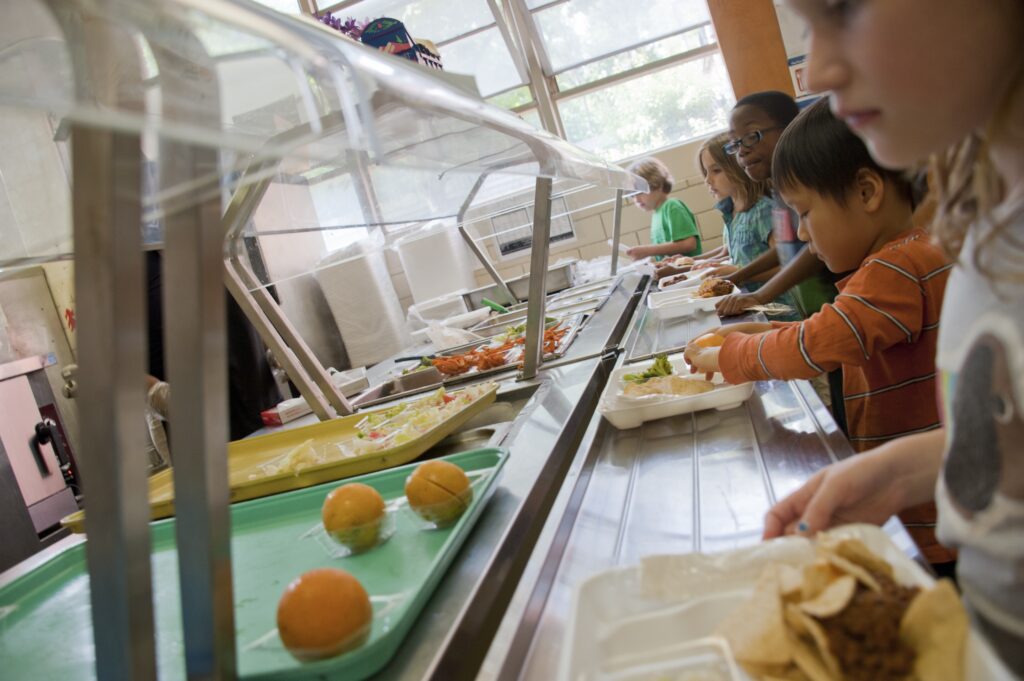
This week marks National School Lunch Week, when we spotlight the role schools play in helping combat childhood hunger and recognize the dedication of our food service workers fighting that battle.
The National School Lunch Program was established in 1946 to provide nutritious meals to children who might not otherwise have access to a daily meal. The program expanded to include breakfast, again recognizing that providing all students with the fuel their minds and bodies need to grow is vital.
National School Lunch Week was created in 1962 to publicize the fact that hunger can keep kids from learning and to emphasize the important role schools play in providing healthy, nutritious food to students.
Aug
A third of parents eat their kids’ lunchbox rejects for dinner, according to a recent poll.
The survey of 2,000 parents with school-aged children took an in-depth look at the American child’s palate, nutrition and how parents get creative to keep their kids fed.
According to parents, although more than one in five (17%) said their child’s lunch is much more gourmet than they had as a kid, parents estimate that 21% of their child’s lunch comes home uneaten at the end of the day, on average.
And when they’re not eating the leftovers themselves (29%), parents said they’ll offer leftover lunch as an afterschool snack (25%) or put it back in the fridge or pantry (22%). Although 41% admit throwing leftovers away.
Commissioned by NatureSweet and conducted by Talker Research, the survey took a close look at how school lunches have changed over the years.
There’s been quite an evolution according to parents with 43% saying today’s school lunches are healthier than theirs ever were, while over a quarter (28%) said there’s more variety.
Although the classic sandwich (61%), chips (56%) and juice (52%) combo is the most popular lunch for kids these days.
When asked about their kid’s least favorite lunch foods, parents listed snap peas (40%) and green beans (36%), along with tuna salad (36%) and hard-boiled eggs (32%).
But when it comes to kids’ food preferences, parents cited quick foods (50%), fresh foods (38%), foods kids can pack themselves (31%) and non-messy foods (30%) as the biggest factors for what kids like in their lunch.
And parents most prioritize nutrients (54%), taste (45%) and cost (33%) when grocery shopping for their kids.
But when thinking of the school schedule grind, the majority of respondents (60%) feel guilty when feeding their children more easy, unhealthy foods rather than whole foods due to being busy (20%) and pickiness (21%).
And the situation is multi-layered as many labeled themselves as “stressed” (30%) and “struggling” (21%) parents.
So, more than a few (79%) have gone to dramatic lengths to gatekeep unhealthy foods from their kiddos, like avoiding them at the store (30%), hiding them (18%), and telling white lies (13%).
“As many parents know, it can be challenging to get your kids to eat what’s in their lunchbox, especially whole foods,” said Dr. Martin Ruebelt, chief scientific officer at NatureSweet. “With this study, we wanted to shine a light on how parents go the extra mile to give their kids healthy, nutritious foods, and the ways they get creative to keep their kids well-fed.”
According to results, the trick is in the presentation: One in three (31%) disclosed they buy snacks and foods with fun packaging that they know will excite their child. And a quarter (24%) rely on cute containers and lunchboxes.
More than half (54%) even said their kid is more likely to eat food if its packaging has their favorite TV show character on it.
But appearances aside, parents said they’re working to educate their kiddos about wellness by actively teaching them about healthy foods and diet (42%), modeling healthy eating (34%) and prioritizing healthy habits in the family’s schedule (31%).
“Incorporating whole foods and produce into your family’s diet and busy lifestyles isn’t as time-consuming as it once was,” adds Dr. Ruebelt. “There are so many grab-and-go healthy snacking options on the market that incorporate whole foods such as produce that are delicious, convenient, and more importantly, kid approved.”
Survey methodology:
This random double-opt-in survey of 2,000 parents of kids aged 5-17 was commissioned by NatureSweet between June 4 and June 11, 2024. It was conducted by market research company Talker Research, whose team members are members of the Market Research Society (MRS) and the European Society for Opinion and Marketing Research (ESOMAR).
Apr
Anyelin Ortega told Colorado lawmakers recently that the lunch line at her high school can be 25 minutes long, often leaving the 17-year-old only five minutes to finish her food.
“It is very disrespectful and demanding for any person to be rushed from eating,” said Ortega, who attends a Denver charter school. “After lunch, I have found myself feeling very anxious and irritated from the lack of energy from having an empty stomach.”
LINK: PCS HELPS SPEED KIDS THROUGH THE LINE WITH WEB POS
Ortega was among the students and advocates who testified in favor of a bill that would create a “time-to-eat” task force to evaluate topics including how much time the state’s school districts are giving students to eat lunch and whether students have recess before or afterward.
Colorado does not mandate schools set aside a certain number of minutes for lunch. Those decisions are left to school districts or individual schools.
The task force would examine the outcomes associated with those decisions, such as students’ academic performance, their behavior, and how much food is wasted because students can’t finish their lunches. The task force would write a report with recommendations for school districts to adopt policies “that allow for increased time to eat,” the bill says.
“It breaks my heart when I see students repeatedly pick up their tray and shovel a few more bites into their mouths as they hold (it) over a trash can and throw away half of their food,” Shannon Thompson of the Colorado School Nutrition Association told lawmakers at a hearing last week. “As a registered dietitian, I work in school nutrition to feed kids, not trash cans.”
Rep. Jenny Willford, a Northglenn Democrat, said House Bill 1301 is based on her personal experience as a parent. When her son started in elementary school, Willford said he was having behavior issues after lunch. She said she worked with the school to figure out the root cause: Her son would play hard at recess but then not have enough time to eat lunch.
“You can’t learn when your tummy is hungry,” Willford said.
House Minority Leader Rose Pugliese, a Colorado Springs Republican, said she agreed to co-sponsor the bill because she had a similar experience with her own children.
In addition to hungry students and wasted food, Pugliese pointed out another problem with short lunch periods: wasted money. Colorado voters approved a measure in 2022 making school meals free for all students, and this is the first year it’s in place. But more students are eating than expected, and the state is having to shore up the program with extra funding.
“From a fiscally conservative perspective, we don’t want to be investing money in food that’s being thrown away,” Pugliese said.
Cade Nelson, a sophomore at Legend High School in Parker, told lawmakers that he supports the free meals program. But he said it’s caused the lunch lines at his school to grow.
“The free lunch essentially does not matter because I’ve seen people run out of time to eat,” Nelson said. “If we had more time to eat, I think everybody would be much happier.”
The bill passed the House Education Committee last Thursday on a 10-1 vote. Most of the pushback and hesitation was not related to the task force but to a separate grant program in the bill meant to promote more physical activity and play during the school day.
An association of Colorado physical education teachers had concerns that the grant program could supplant P.E. teachers. But the committee approved an amendment requiring schools to have a P.E. teacher on staff in order to apply for the grant funding.
Rep. Anthony Hartsook, a Parker Republican, was the only lawmaker to suggest scrapping the time-to-eat task force in favor of a mandate that school districts lengthen lunch times.
“Why not do a mandate?” Hartsook said. “They need more time to eat, they need more time to play. Duh. We all know that. So why are we waiting?”
But Willford said school scheduling is a tricky balance that must take into account the amount of instructional time required by the state. She said she worried a mandate would cause problems.
“If we move straight to a mandate, it becomes a bit of an unfunded mandate for local school districts,” Willford said. “My hope is that the task force comes back with a number of unique models of how we can implement longer periods for school lunch that is reflective of the diversity of schools we have across our state.”
Hartsook voted yes on the bill. The sole no vote was from Republican Rep. Don Wilson.
The bill says the task force would make its recommendations by Feb. 1, 2025. Task force members would include students, parents, educators, school board members, teachers union representatives, and representatives from community organizations.

Feb
CHICAGO, Ill. — Action for Healthy Kids (AFHK) encourages school districts nationwide who have made significant nutritional improvements to the quality of their school meals to apply to the Healthy Meals Incentives Recognition Awards, sponsored by the USDA’s Food and Nutrition Service (FNS). The Recognition Awards application can be found at: www.healthymealsincentives.org.
Healthy Meals Incentives Recognition Award winners – which will include all school districts who meet award criteria – will receive a travel stipend to attend an exclusive national Healthy Meals Summit in the heart of Las Vegas, NV. Winners will also receive national and local recognition through traditional and social media and have access to an awardee toolkit with promotional resources that help them publicize their success to local media and the school community. FNS and AFHK will share best practices from Recognition Awardees nationwide through traditional and social media, stakeholder engagement, training and technical assistance activities, and Healthy Meals Summits.
The Healthy Meals Incentives Recognition Awards will spotlight innovative strategies that school districts have used to serve meals that meet the 2020-2025 Dietary Guidelines for Americans. School districts can apply for one or more of the following Recognition Awards categories:
- Breakfast Trailblazer
- Small and/or Rural School Food Authority Breakfast Trailblazer
- Lunch Trailblazer
- Small and/or Rural School Food Authority Lunch Trailblazer
- Innovative School Lunch Makeover
- Innovation in the Cultural Diversity of School Meals
- Innovation in the Preparation of School Meals
- Innovation in Nutrition Education
School districts in all 50 states, the District of Columbia, Puerto Rico, Guam, and the U.S. Virgin Islands are eligible to apply for the Recognition Awards if they participate in the National School Lunch Program and/or School Breakfast Program. Applications will be reviewed on a rolling basis over a two-year application period ending June 30, 2025.
“Action for Healthy Kids is excited to partner with USDA’s Food and Nutrition Service to showcase innovative school nutrition practices that provide children with access to nutritious school meals,” said Rob Bisceglie, CEO of AFHK. “School meals are a powerful tool to help kids get the nutrition they need. We are committed to working with the USDA and school nutrition professionals to ensure that school meals continue to provide the very best for our nation’s children.”
Dec
OGDEN — The Ogden School District (A PCS customer since 1999!) has taken a big step in helping its students, especially those in need.
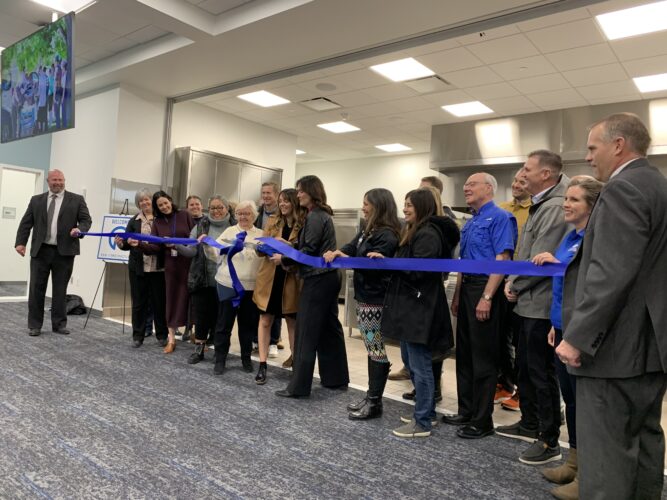
On Friday, officials with the district and the MarketStar Foundation gathered to cut the ribbon on the district’s new Child Nutrition Center located on the campus of the district offices.
Prior to the official ribbon-cutting, Ogden School District Superintendent Luke Rasmussen told an audience of officials, media and other spectators that the district was unveiling an exciting facility.
“It’s going to provide valuable food security and storage for our students,” he said. “It’s a state-of-the art training facility, as you can see, for our kitchen staff. They’re going to be able to train new cooks and continue to train our staff in the best possible ways going forward.”
He noted that the building will do a lot beyond that.
“It’s also going to be a valuable learning center for special education students to come learn valuable job skills,” he said. “It’s added much-needed office space and we’ll use this facility for training all of our district employees.”
However, one of the biggest resources that will now be located at the Child Nutrition Center will be the MarketStar Resource Center, a collaborative partnership between the district, the Ogden School Foundation, the MarketStar Foundation, Catholic Community Services and the United Way of Northern Utah.
Brynn Murdock with the Ogden School Foundation said the MarketStar Resource Center, or MSRC, being located in the Child Nutrition Center will be a major resource for the district.
“We know that our students, no matter the opportunities we give them, aren’t going to be able to succeed if they don’t have their basic needs met,” she said. “If they’re too hungry to focus in class, if they don’t have clothing or whatever it is — this just really helps to fill those gaps so that our students can be successful. We’re excited to be opening new support centers in our schools that will allow students to have access to showers and different things, and the MSRC is going to be a vital part in that.”
Danette Pulley with the MarketStar Foundation said the group has contributed a lot of basic needs to students in the Ogden School District over the past year.
“Just last year, 598 students were served through the MSRC,” she said. “Over 17,000 items were delivered out to students in schools — that’s over 7,000 food items, over 4,000 clothing items, over 4,000 pairs of shoes, over 3,000 household and hygiene items and 2,500 kits of school supplies. The more powerful thing is the way this community continues to give. Just last year alone, another $107,000 from across the community in in-kind and cash donations continue to come in through the (Ogden) School Foundation to support the MSRC.”
Ken Crawford, maintenance director with the Ogden School District, said the new facility is about much more than just nutrition and training.
“The way we make change and the way that we break the cycles of poverty is by reaching out, providing services, helping those in need and giving them the skills and knowledge to help themselves,” he said. “I hope that when you guys come into this facility, you think of it as a place of learning, as a place of service and a place of love.”
Joyce Wilson, Board of Education president, said she’s impressed with how Ogden supports these types of initiatives.
“It’s unfortunate that the student resource centers are needed, but what a community we have that steps up … and does whatever is needed,” she said.
Following the ribbon-cutting ceremony, Rasmussen told the Standard-Examiner: “We know that we have students that come from diverse backgrounds and students that have many needs,” he said. “By trying to educate and meet the needs of the whole child, this is going to help us provide education for our students by meeting some of those basic needs our students have.”
He added the facility is fully operational as of Friday.
“We’re ready to roll,” he said.
Republished with permission from The Standard Examiner
Jul
Starting July 1, a whole slate of new state laws kicked in, including one that advocates working to combat hunger say is a game changer: Free breakfast and lunch for all kids in school.
This will make permanent in Minnesota a COVID-era policy that provided the meals at no cost to students, regardless of their family income. The state “universal meals” program will begin this fall and extends to some remaining summer academic programs, according to the Minnesota Department of Education.
Meal Counts Made Easy For Statewide Free Meal Initiatives
Schools must be enrolled in the national lunch and breakfast programs in order to qualify. The federal government will still pay for meals it otherwise would for children who meet the requirements, while the state will pick up the tab for the difference of covering everyone else. That’s estimated to be $388 million in this two-year state budget.
For Amber Lightfeather, a mother of five in Duluth, said the pandemic rules allowing for the free school meals for a few years was a lifeline. That expired last fall, meaning she had to pay full price once again.
 Full Story: WCCO-TV (Minneapolis)
Apr
Daryn Guarino had to tell a six-year-old girl she couldn’t eat lunch.
At Athens County’s Alexander Local School District, Guarino spends his days creating recipes, building menus and serving food to the students.
But his job isn’t so enjoyable on Wednesdays.
“On Wednesdays, I become a debt collections agent, and I chase the parents of families that have begun to accumulate lunch debt,” Guarino told an Ohio House Finance subcommittee on primary and secondary education.
Each week, he has to contact 250 families, about 1/3 of the student population at Alexander, a list that grows every week.
But if he doesn’t contact the families and do everything in his power to get the meal debt paid, he and his employees in the cafeteria will see the problem they all fear: the cash register will shut off for those students.
“The student will not be allowed any transactions at all,” Guarino said. “No food, nothing.”
His lunch workers have threatened to call in sick rather than tell a student they can’t eat, even donating money when they see a student’s debt getting close to the faultline.
So Guarino has to guide students out of the lunch line himself, and watch them gradually stop coming to the lunch room at all.
“Every day afterward, that student will quietly approach a register operator and ask if they can eat that day, and slink away if they can not,” Guarino said. “Eventually, they stop coming to the cafeteria all together.”
It’s a problem seen in many school districts across the state, and one administrators are begging legislators to fix as they discuss the education budget as a whole.
Tiffany McCleese, child nutrition director for the West Clermont Local School District, said her district has almost $22,000 in school meal debt, which causes distractions for school employees, but also the students themselves.
“We are working to provide sustenance so that our students, Ohio’s children, the future of Ohio, are ready and able to learn,” McCleese said. “It is difficult to do this when so many students are distracted by rumbling tummies.”
An issue of parental debt, even a “pride gap” from parents who know the stigma attached to free and reduced lunch, becomes a student problem, where they can’t eat the hot lunch of the day, or are faced with eating no lunch at all.
“Just like textbooks, Chromebooks and transportation, school meals are essential for student success,” said Alexis Weber, food service director for Austintown Local Schools in Mahoning County.
There is federal money to support part of the meal programs, including summer meals to cover the gap when students aren’t in school, and some districts have non-profit accounts that can cover meals, but ultimately, it’s state funding they need.
“With appropriate state funding to pick up where the federal funding falls short, school food service departments in our urban cities and in our rural counties could offer breakfast and lunch at no cost to all students, eliminating all the stigma that has perpetuated for decades around school meal benefits,” Weber said.
Universal breakfast and lunch programs have the support of a majority of Ohioans, according to a Baldwin Wallace poll of parent priorities when it comes to education.
In the poll, 87% of parents said meals should be provided without regard for the student’s ability to pay for the food.
The COVID-19 pandemic also inadvertently served as a pilot program for universal lunches, as school districts took it upon themselves to send food home to students as they learned in online classrooms.
The concept of giving all students free meals regardless of income could also give a boost to farmers around the state as well, as some districts already work with local food producers to bring nutritional meals to their students, according to Weber.
By reducing the burden on parents to think about lunch, the stigma that comes with students who are easily identified as free lunch kids can also be removed, taking away a stressor for students as well as getting the food they need.
“We demand that kids be in school, away from their parents for six hours per day and then, for some reason, we refuse to feed them while they are there,” Guarino said.
To combat the “pride gap” and the stigma, Guarino said it would be better to require all families to apply for assistance, regardless of income level.
“I’d prefer that parents had a mandatory form that they had to fill out, so I wouldn’t have to chase them around,” Guarino said. “Because I know a lot of them would qualify and it wouldn’t be an issue.”
As the legislature debates the merits of private school funding, public school funding, and everything involved in education, school administrators say hunger should be a no-brainer. While increasing the annual income eligibility for free or reduced lunch – the cutoff is currently about $51,000 for a family of four – eliminating the need to pay at all would be the best solution, the school districts said.
“Who is more worthy of our tax dollars than our children?” Guarino said.
Via: Ohio Capital Journal
Mar
Breakfast in the Classroom with OrderNOW by PCS on the PayPAMS Parent Portal
Dave 0 comments School Lunch News From Around The USA, Uncategorized
Breakfast is the most important meal of the day. It is the meal that provides the body with the necessary nutrients to start the day off right. Not all children have access to a healthy breakfast at home, that is where Breakfast in the Classroom comes in. Breakfast in the Classroom is a great way to ensure that all students have access to a healthy breakfast. With the help of OrderNOW, schools can provide this service with ease and convenience.
Here’s How it Works
 OrderNOW is an ordering app for PCs, tablets, and phones that allows parents and teachers to order breakfast for their students with ease. Teachers can place orders for their entire class and parents can order breakfasts for the whole week. Meal counts are tabulated for food production and routed back to the classroom or alternate serving areas, ensuring that all students have access to a healthy meal to start their day. Parent ordering saves valuable time for teachers who no longer have to worry about collecting breakfast orders from each student and delivering them to the cafeteria.
OrderNOW can also be used by students with smart phones for direct orders to the cafeteria.

Feb
Students can’t learn if they’re hungry, a Utah middle-school teacher shared in a now-viral TikTok clip.
Garrett Jones’ six-second video quickly sparked a wave of generosity that would pay off thousands of dollars worth of student lunch debt.
“School lunch should be free,” wrote Jones, a five-year educator of Heber City’s Rocky Mountain Middle School, in the viral clip’s caption.
The seventh- and eighth-grade teacher posted the video as a twist on a social media trend that involved people requesting small donations toward personal trips, weddings or dream cars, KSL News reported.
When Jones, a father of two, decided to use the trend for a charitable cause two weeks ago, he had no clue the video would help raise over $30,000.
 Contact